
Ground Penetrating Radar
(GPR) Services in Auckland
Accurate utility locating using advanced GPR technology
At Precision Site Solutions, we provide high-resolution Ground Penetrating Radar (GPR) services for contractors, engineers, and asset owners who need fast, reliable underground mapping. Whether you’re managing an infrastructure upgrade or a new development, our GPR service reduces the risk of damage to hidden assets, improving safety and avoiding costly delays.
Ground Penetrating Radar (GPR) is a fast, non-invasive way to investigate what lies beneath the surface before design or excavation begins. It uses high-frequency radar pulses to create a picture of subsurface conditions, helping Auckland contractors, engineers and surveyors confirm service alignments, identify buried utilities and reduce the risk of unexpected clashes. Our operators use GPR as part of broader underground investigation workflows, ensuring every scan is supported by practical interpretation and clear, construction-ready outputs.
What is Ground Penetrating Radar (GPR) and how does it work?
GPR works by sending electromagnetic pulses into the ground and measuring how they bounce off buried objects and material changes. The returning signals help our team estimate depth and visualise subsurface features such as utilities, ducts and voids.
Auckland’s soil types, such as clays, mixed fill and coastal sands, all affect radar performance, so our operators adjust frequencies and scanning patterns to suit site conditions. This ensures more reliable subsurface imaging, clearer depth estimation and stronger decision-making during design and excavation.
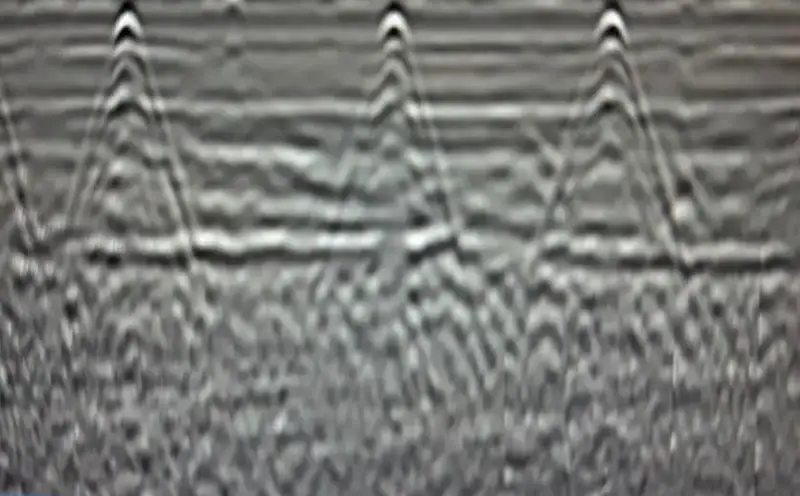
What Ground Penetrating Radar can detect
GPR is effective for detecting both metallic and non-metallic underground features, making it ideal for broad preliminary investigations. It can identify utilities such as stormwater, wastewater, telecommunications, power conduits, gas lines and private laterals.
It also highlights changes in material, voids, buried debris, foundations and old infrastructure that may not appear on as-built plans. In many Auckland projects, GPR is used alongside utility mapping and EMI locating to confirm alignments and fill gaps in network records.
Benefits of using GPR on Auckland projects
GPR provides a safe, non-destructive way to understand what lies beneath a site before ground is broken. It supports design efficiency by validating network plan data, confirming service depths and identifying unknowns early. This helps reduce redesigns, RFIs and avoidable delays.
For construction teams, GPR reduces excavation risk by exposing potential hazards before machinery arrives on site. Radar data also supports compliance, especially when preparing Corridor Access Requests or coordinating with other civil, drainage and roading works.
Limitations of Ground Penetrating Radar
GPR is a powerful tool, but its performance depends on soil conditions and the materials present on site. Wet clays, high-salt soils and reinforced concrete can absorb or scatter radar signals, reducing depth range and clarity. This is common across parts of Auckland where clay content is high.
GPR may also struggle with very deep utilities, complex ground layers or sites with extensive fill. In these situations, our operators adjust scanning frequencies, refine grid patterns or combine GPR with EMI locating to ensure the investigation remains accurate and useful.
When to use GPR services on your project
GPR is most effective during early-stage planning and before any excavation takes place. It helps validate network plan information, identify unknown utilities and confirm alignments ahead of design work. Many Auckland engineers use GPR when preparing concept designs, coordinating service corridors or assessing potential clashes with drainage, power or communications.
It is also valuable when existing as-built records are incomplete, outdated or missing. Using GPR early reduces design rework, supports safer construction and helps project teams make informed decisions about subsurface risks.
GPR for concrete and structural elements
GPR is commonly used to scan concrete slabs, walls and structural elements to identify rebar, post-tensioning, conduits and voids. It provides a non-destructive way to confirm reinforcement layouts before coring, cutting or drilling.
On Auckland projects, this helps prevent damage to critical structural steel and reduces the risk of injuring workers during penetrations. GPR scanning can also highlight construction inconsistencies, helping engineers verify whether a slab or beam has been built according to design. Where required, scans can be paired with detailed marked-out locations for safe drilling zones.
GPR for design and pre-excavation planning
GPR is a valuable tool for assessing design feasibility and minimising excavation risk. It helps confirm the presence, depth and alignment of utilities before trenches, foundations or retaining works begin. During pre-design, radar data supports layout decisions, reduces the chance of clashes and provides insight into what lies beneath newly developed or previously disturbed ground.
For contractors, GPR scanning reduces the likelihood of hitting services, improving site safety and protecting project timelines. Combined with EMI locating and survey-grade recording, GPR forms a reliable base for accurate underground service models.
What you receive after GPR scanning
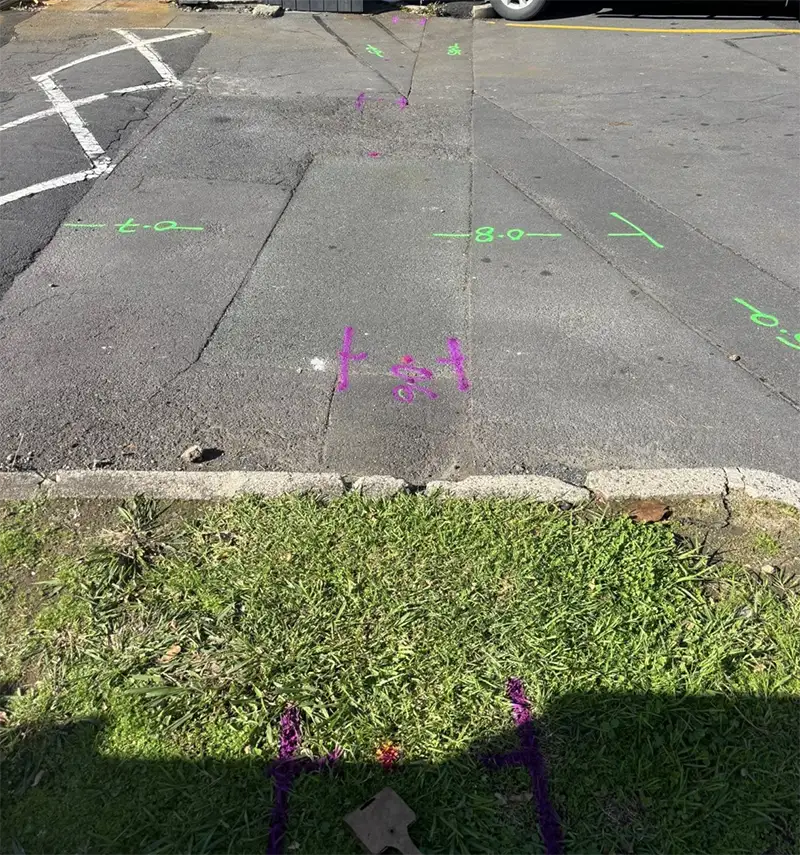
After completing a GPR scan, we provide clear, practical outputs you can use for design or construction. These typically include marked-out utilities on site, depth estimates, photos, and notes highlighting risks or uncertainties.
Where required, we can supply geo-referenced CAD or PDF plans showing the interpreted service alignments and radar features. Our operators explain what the data means in plain language and outline any limitations or areas needing further investigation, such as potholing or EMI confirmation. This ensures your team has reliable underground information before making decisions.
Why combine GPR scanning with EMI locating?
Using GPR on its own provides valuable subsurface imaging, but combining it with Electromagnetic Induction (EMI) produces a far more complete understanding of underground utilities. EMI is highly effective for tracing conductive services such as power, telecommunications and metallic water lines.
GPR complements this by detecting non-metallic pipes, voids, ducts and buried structures that EMI cannot locate. When used together, both methods close gaps in network plans and reduce the chance of missing critical underground features. This combined approach is especially useful on Auckland sites where mixed soil conditions, private laterals and historical infrastructure can complicate investigations.
GPR services that support safe, confident construction
Accurate underground information improves safety, reduces delays and supports better decision-making during design and construction. Our operators interpret radar data on site and provide clear explanations about what has been detected, including any limitations or areas of uncertainty. This gives project teams confidence when planning trenching, excavation, redesign or service relocations.
Whether you are coordinating with other contractors, preparing a Corridor Access Request or checking a site before machinery arrives, reliable GPR scanning helps you move forward with fewer risks and fewer surprises.
Why choose Precision Site Solutions?
We combine industry-grade equipment with experienced operators who understand what matters on-site:
High-frequency GPR scanning for enhanced clarity
Experienced surveyors with civil and construction backgrounds
Geo-referenced output (PDF or CAD/DWG)
Quick turnaround and responsive communication
Need accurate GPR locating?
We can help you avoid costly surprises. Call us or contact us to discuss your project requirements.
Frequently Asked Questions
about GPR
What is GPR?
GPR, or Ground Penetrating Radar, is a non-destructive scanning method that uses high-frequency radar pulses to identify subsurface features without excavation. It helps detect utilities, changes in material, voids, buried structures and unknown services. Our operators interpret these signals in real time to give you a clear picture of what lies beneath the surface before design or construction begins.
What can GPR detect?
GPR can detect both metallic and non-metallic utilities, including stormwater, wastewater, telecommunications, gas and electrical conduits. It also identifies voids, ducts, buried foundations, abandoned services and changes in soil composition. While it cannot confirm every detail in isolation, it provides a strong foundation for understanding subsurface conditions when combined with EMI locating or survey verification.
What can’t GPR detect?
GPR may struggle with very deep services, heavily reinforced concrete, saturated clays or environments with extensive metallic clutter. It also cannot identify the exact material or condition of a pipe on its own. In these situations, we rely on additional locating methods, construction plans, EMI tracing or targeted potholing to confirm what the radar is showing. This combined approach ensures you still receive practical, decision-ready information.
How accurate is GPR?
GPR is highly accurate when used in the right soil conditions and with skilled interpretation. Depth estimates typically fall within a reasonable tolerance for design and pre-excavation planning. However, wet clays, reinforced concrete, high-salinity soils and complex fill can reduce signal clarity. Our operators adjust frequencies, grid patterns and scanning direction to improve accuracy and always note areas where further investigation, such as EMI locating or potholing, may be needed.
When is the best time to use GPR?
GPR is most effective before design is fixed or excavation begins. Early scans help confirm service locations, validate network plans and highlight unknowns before detailed design work is completed. This reduces redesigns and allows construction teams to plan safer, more efficient excavations. GPR is also useful on existing sites where as-built records are incomplete, outdated or missing.
Is GPR safe?
Yes. GPR is a completely non-destructive and safe scanning method. It emits low-power electromagnetic pulses similar to those used in many everyday technologies. There is no impact on site personnel, infrastructure or the environment, and scans can be carried out while other work is underway. It is one of the safest ways to gain accurate information about underground utilities before breaking ground.
How long does a GPR scan take?
Scan duration depends on site size, access, and the complexity of underground conditions. Small areas may take as little as 30-60 minutes, while larger or more congested sites can take several hours. Factors such as ground cover, interference and the number of required grid passes also influence time. We always provide a clear estimate before work begins and adjust plans to minimise disruption.
Do you provide reports or marked-out plans?
Yes. We can provide on-site mark-outs, location notes, photographs and depth estimates as part of our standard GPR service. Where required, we also produce geo-referenced CAD or PDF plans showing interpreted alignments, radar features and areas of uncertainty. These deliverables support design teams, surveyors and contractors in coordinating underground works with greater confidence.
Where do you provide GPR services?
We provide GPR scanning across Auckland, including Silverdale, the Hibiscus Coast, the North Shore, Central Auckland and West Auckland. Our team regularly supports engineers, contractors and asset owners across the region, from early-stage design through to pre-excavation planning and construction support.
Call us today to discuss the options for your next project.
We provide Ground Penetrating Radar services and 3D scanning.