
Concrete Scanning
Cutting, drilling or coring a concrete slab for any reason?
It’s vital that you know what’s lurking beneath the surface. The C-thrue Concrete Scanner means we can see down to greater depths than ever before.
Protect people, structures, and utilities and save thousands in costly repairs and time delays. Identify structural faults, cracks, cavities and voids. Detect rebar, conduits and post-tension cables.
Call 022 477 2341. At Precision Site Solutions, we offer a range of concrete scanning services to help keep our clients safe and sound.
We’ll reveal the true picture for optimal decision-making
Due Diligence
See behind the scenes rather than go in blind and take the risk.
Concrete should be scanned before any destructive work is carried out. This includes coring, drilling, cutting, and any other activities which could compromise the concrete’s strength.
Accuracy
Don’t hack into the great unknown.
In renovation projects, concrete scanning gives tradespeople such as plumbers, electricians and HVAC contractors a heads-up as to exactly where they can and can’t drill.
Assurance
Feel confident that safety and building regulations are being adhered to.
Concrete scanning is an incredibly useful tool for showing designers, engineers and architects exactly how much reinforcement is contained within a slab and where it lies.
Get an accurate representation of what’s hidden within the concrete
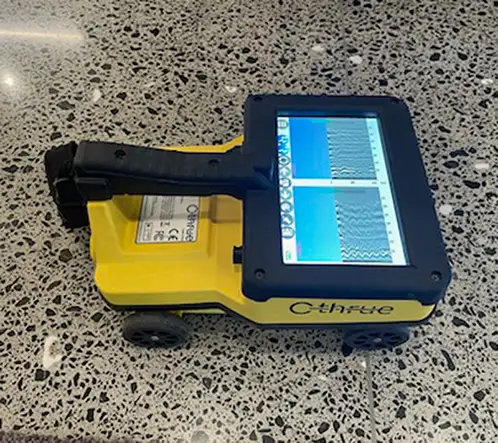
Our concrete scanners produce on-site, real-time results with minimal disruption and cost. You can literally see through concrete structures and get 3d images onsite. Thanks to our concrete scanners’ advanced GPR processing and imaging software, we can provide clearer and faster surveys.
The dual antenna polarisation means we can clearly visualise major structural components within concrete. We can detect both first and deeper levels of rebars.
The C-thrue Concrete Scanner has the ability to look for more objects or gaps within the first 700mm of concrete than any other scanner on the market. This makes it the only real choice for anybody in the construction industry who takes safety and full disclosure seriously.
Using this advanced concrete scanner we can also assess concrete and detect steel reinforcing and other objects within concrete structures up to a depth of 800mm.
How do we scan concrete?
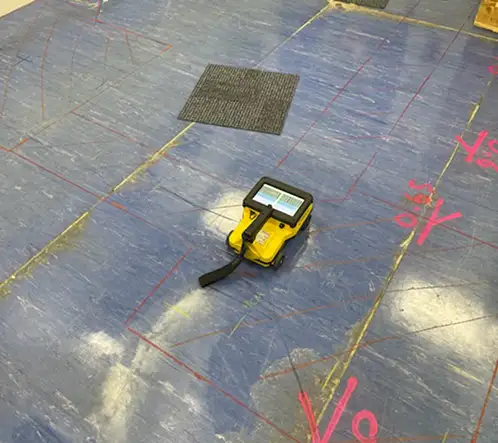
Concrete is scanned using ground-penetrating radar. This concrete imaging method is safe, non-invasive and more effective and versatile than X-ray. Our scanner is passed over the exposed surface of the concrete, sending a signal. The signal is sent back to the device in different patterns depending on what type of material is found and at what depth. The scanner’s external controller enables real-time data processing and results in 3D models. That means easier and faster data interpretation in the field for more efficient, confident decision-making.
Concrete scanning services we offer
Knowing the state of the concrete before drilling, digging, cutting or demolishing will ensure no unexpected interruption to services and help maintain the concrete’s structural integrity.
The C-thrue Concrete Scanner solution has many applications and operations including:
Slabs
Columns
Decks
Floors
Walls
Roadways
Footpaths
Encasements
Overpasses
Monuments
Bridges
Tunnels
Your protection against the unknown
Accurate concrete scanning is vital to the safety of personnel and the success of both new and existing concrete construction, utility placement, traffic control and underground utility repair. If you work in construction and need concrete scanning, why not get in touch? A member of our experienced, professional surveying and engineering team will be only too happy to help.
When Do You Need Concrete Scanning?
Concrete scanning is required any time you need to cut, core, drill, or fix into a concrete slab, wall, or structure without knowing what is inside. This includes:
- Installing new penetrations, pipes, or conduits through existing slabs
- Core drilling for structural or drainage connections
- Fixing or anchoring into walls and columns
- Renovation work on post-tension slab buildings – where cutting through a post-tension cable can be extremely dangerous and costly
- Investigating voids, delamination, or suspected defects below or within concrete
Concrete scanning is also used during construction quality assurance, particularly to verify rebar placement and cover depths before concrete is poured over reinforcement.
Our Concrete Scanning Process
We use ground penetrating radar (GPR) to scan concrete structures. GPR produces a cross-sectional profile of what is inside the concrete, allowing our operator to identify the position, depth, and orientation of reinforcing steel, post-tension cables, conduits, and voids in real time.
Where something is identified, we mark it at the surface so your contractor knows exactly where it is before cutting begins. We can also provide a written report and scan images for your records.
Frequently Asked Questions
about Concrete Scanning
What is concrete scanning used for?
Concrete scanning is used to identify what is embedded within concrete before cutting, drilling, coring, or demolition work takes place. This includes locating reinforcing steel, post-tension cables, conduits, and other services, as well as identifying voids, cracks, or anomalies that may affect safety or structural integrity.
Can concrete scanning detect all services inside concrete?
Concrete scanning can identify a wide range of embedded objects, but detection capability depends on factors such as depth, material type, concrete composition, and site conditions. While reinforcing steel and post-tension cables are commonly identified, some services or materials may be more difficult to detect on their own.
Where greater certainty is required, concrete scanning is commonly supported by ground penetrating radar and, where services extend beyond the concrete structure, professional underground services locating to improve confidence on complex or high-risk sites.
Is concrete scanning the same as ground penetrating radar?
Concrete scanning is the service outcome, while ground penetrating radar is one of the primary technologies used to perform the scan. Ground penetrating radar generates subsurface images that allow trained operators to identify embedded elements such as reinforcing steel, post-tension cables, and services within the concrete. This information is critical for assessing both structural and safety risks before drilling, cutting, or coring, helping to prevent damage, injury, or unintended structural failure.
When should concrete scanning be carried out?
Concrete should be scanned before any destructive work is carried out. This includes coring, drilling, cutting, or any activity that could compromise the concrete’s strength or damage embedded services where their location is unknown or cannot be reliably confirmed.
Who typically requires concrete scanning services?
Concrete scanning services are commonly required by builders, contractors, engineers, project managers, and asset owners responsible for managing risk and site safety. It is often specified on projects where structural integrity, service protection, and compliance are critical.
Does concrete scanning eliminate all risk?
Concrete scanning significantly reduces risk by identifying many concealed hazards before work begins, but no scanning method can guarantee the detection of every embedded object. Scan results should always be considered alongside drawings, site knowledge, and professional judgement when planning works.